Modern city dining, minus the talking and the lingering.
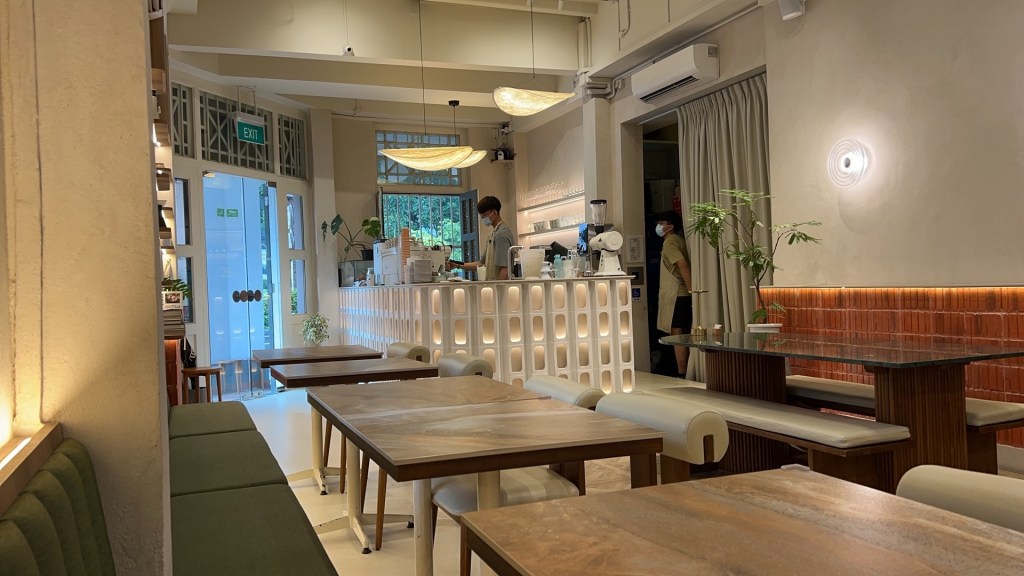
There are a few parameters that immediately give you the “vibe” of a restaurant or café, whether by conscious choice of the owner or by sheer convenience.
Menu / Ordering
In today’s digital economy, more and more restaurants are moving to digital menus. You walk into a place and are immediately asked by a waiter or waitress to scan a QR code — or worse, you’re greeted by no one, just a giant printed QR code on the wall.
In places like China where everything has moved online, you only get to order from a human being at high-end restaurants, where service is part of the price tag.
With the QR code, sometimes you’ll be directed to a full-blown ordering system. In that case, you really have no need to speak to anyone at all. You can fine-tune every detail — whether you want vinegar with your xiaolongbao, how sweet you want your milk tea, even whether your dessert should come alongside the rest or later. Finally, you pay via Apple Pay (preferably) or by keying in your credit card details (less preferred), or sometimes at the counter. Some places won’t even serve you until you’ve paid — making it harder to complain, as if to say: I don’t care what you have to say about my food.
Other times, it’s still a digital menu but you order through a waiter. E-menus aren’t created equal. Some are built clearly — same font, bullet points, no fuss. Others are built to impress (or confuse), designed according to the owner’s aesthetic ideals. Cocktails with poetic names, categories based on seasons, color patterns, tasting sensations, or even the world map.
Those menus invite you to engage, to ask questions. You forgive them for ditching hard copies, whether for environmental or economic reasons.
And then there are places that still give you a hard copy menu and have you order through a human being. Those owners clearly chose to do so — and you can feel it. You feel like a real person, treated with heart. I love those places.
Dining Limits
“We want to inform you our dining limit is 1.5 hours.”
A line I now hear quite often around Singapore — consistent with what Singapore is known for: efficiency.
You appreciate that efficiency when you can collect your checked-in bags within five minutes after a concert — but not when you’re warned to speed up eating and catching up with friends on an otherwise cozy Sunday morning.
After hearing that, you awkwardly sit down with a cloud hanging over your head, calculating whether your time is almost up. You don’t even dare order a cocktail, fearing you’ll get too chatty — and imagine the humiliation of being asked to leave mid-story about your elevator crush last Wednesday.
The other day I saw a manners coach on social media explaining that it’s courteous to order something every hour you stay at a café. Maybe that’s true, from the owner’s perspective. But it makes the experience feel unnatural — I’m not ordering because I want to explore more of the food and the surroundings, but because of pressure and guilt.
I wouldn’t want that kind of guilt for my customers.
Maybe that’s why I should never own a place — I’d surely lose money.
The Human Touch
One reason some of us enjoy talking to ChatGPT more and more is because of its surprisingly human warmth. It remembers what you’ve told it — an upgrade from most male partners.
At a restaurant, when a waiter starts to recognize you, knows your usual order without asking, and chats with you like an old friend — that’s when you feel like you belong. Like you’re special. Like you’re more than just another cog in the capitalist machine.
Of course, that’s becoming increasingly rare as everything gets digitalized.
Most waiters don’t want to talk to you — understandably, since befriending patrons probably doesn’t earn them any extra pay. It’s not something their boss cares about anymore.
Today, at a neighborhood café, my husband ordered a bagel. I thought he wanted an avocado toast and asked him afterwards why he changed his mind.
He said he didn’t see that on the menu.
I laughed and pointed out, “There’s avocado tartine, you just didn’t know what that meant!”
While I was teasing him, a passionate waiter popped his head over and joined in, explaining what a tartine is.
I loved that he was eavesdropping. It felt like gaining an ally in mocking my husband.
Oh, how dearly I miss the good old days — flipping through oily, wrinkled menus and shouting orders into the bustling kitchen.
When the owner knew I had a big exam coming up and would slip me a free egg on top of my noodles.
I’ll visit that stall once more before the owner retires at 73.

留下评论